
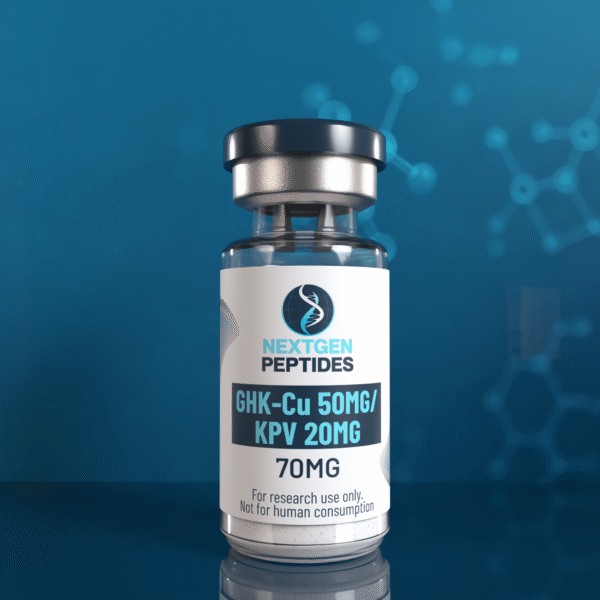
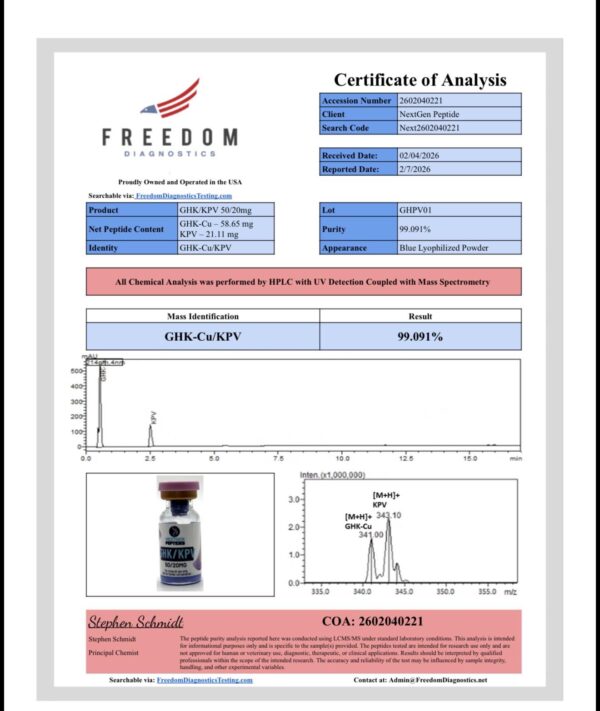
GHK-Cu/KPV Blend: Peptides Australia for Sale – Research Overview and Laboratory Information
Introduction
The GHK-Cu/KPV Blend is a combination of two extensively studied peptides that continue to attract interest in regenerative biology, cosmetic science, immunology, and cellular signaling research. Researchers investigate this peptide blend to better understand tissue repair pathways, inflammatory response mechanisms, extracellular matrix regulation, and cellular communication systems in controlled laboratory environments.
Each peptide contributes distinct research value, making this blend a subject of ongoing investigation in molecular biology research and tissue regeneration models.
GHK-Cu is widely studied for its relationship to collagen regulation, extracellular matrix remodeling, and cellular repair pathways.
Together, these peptides provide researchers with an opportunity to examine how regenerative and immune-related biological signaling systems may interact within complex cellular environments.
All information provided is for educational and research reference purposes only.
What Is GHK-Cu/KPV Blend?
GHK-Cu (glycyl-L-histidyl-L-lysine copper complex) is a naturally occurring copper-binding tripeptide identified in human biological systems. It is widely studied in cosmetic science and regenerative biology due to its association with tissue remodeling, extracellular matrix regulation, and cellular repair mechanisms.
KPV is a short peptide fragment derived from alpha-melanocyte-stimulating hormone (α-MSH). It is investigated in immunology research due to its potential involvement in immune communication pathways, cytokine signaling systems, and inflammatory response mechanisms.
When combined, researchers explore the GHK-Cu/KPV Blend as a dual-pathway research model involving tissue regeneration, cellular repair systems, and immune signaling pathways.
Research Areas of Interest
Researchers commonly investigate the GHK-Cu/KPV Blend in relation to:
- Tissue regeneration research
- Skin biology studies
- Extracellular matrix remodeling
- Cellular communication systems
- Immune signaling pathways
- Inflammatory response models
- Oxidative stress research
- Fibroblast activity studies
- Cytokine signaling investigations
- Molecular biology research
- Peptide signaling systems
- Cellular repair mechanisms
Scientific and Research Applications
Key research applications include:
- Skin regeneration pathway studies
- Cellular repair research models
- Tissue remodeling investigations
- Inflammatory response signaling research
- Immune communication pathway studies
- Collagen regulation research
- Oxidative stress response investigations
- Barrier function research
- Cellular protection pathway studies
- Molecular signaling research
Reviews
There are no reviews yet.